


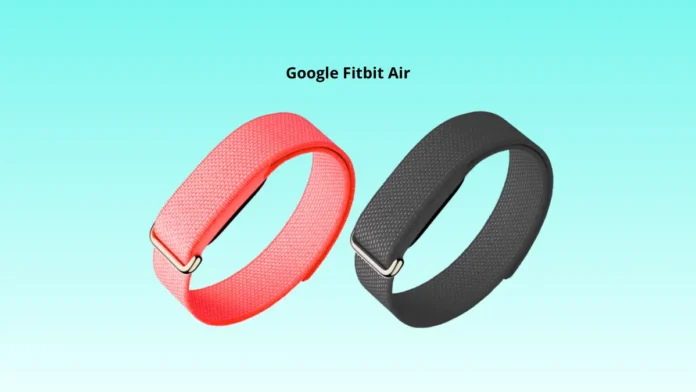
LOS ANGELES, June 16, 2026 — Google is continuing its expansion in the wearable technology market with the growing rollout of the Google Fitbit Air, a lightweight fitness tracker designed to deliver health monitoring without the distractions commonly associated with smartwatches. The device represents one of Google’s most significant Fitbit launches in recent years as the company shifts its focus toward simplified health tracking and AI-powered wellness insights.
Unlike traditional fitness trackers and smartwatches, the Google Fitbit Air features a screen-free design that relies entirely on the companion Google Health application for viewing fitness data, sleep reports, and activity metrics. Google says the approach is intended to help users focus on their daily lives while the wearable quietly tracks health information in the background.
The Fitbit Air arrives with continuous heart rate monitoring, blood oxygen tracking, sleep analysis, heart rate variability measurements, and activity tracking capabilities. The device is also integrated with Google’s expanding health ecosystem, allowing users to receive personalized wellness recommendations generated through AI-powered coaching tools.
Read Also:
AI Powered Sea Drones: The New Era of Unmanned Maritime Rescue
Optimizing Water Rescue Drone Motors: Low-KV vs. High-KV Configurations
Industry analysts view the product as Google’s direct response to the growing popularity of minimalist wearables and recovery-focused fitness devices. Rather than competing solely with smartwatches, the Fitbit Air targets users who prefer passive health tracking without constant notifications, apps, and touchscreen interactions. This strategy places the device in competition with emerging screen-free wearables that emphasize comfort and long-term health monitoring.
One of the most notable aspects of the Fitbit Air is its compact form factor. Reports indicate that the wearable weighs approximately 12 grams when paired with its band, making it one of the lightest fitness trackers currently available from Google. The company has also introduced multiple interchangeable bands designed to appeal to users seeking both fitness functionality and everyday comfort.
The launch of the Fitbit Air is also tied to a broader restructuring of Google’s health platform. Alongside the device, Google has been transitioning Fitbit services into the new Google Health ecosystem, a move intended to unify the company’s health and wellness offerings under a single brand experience. The change reflects Google’s long-term strategy of integrating artificial intelligence more deeply into personal health management.
Early market reception has been mixed. Many users have praised the lightweight design and distraction-free experience, while others have reported software-related issues and synchronization challenges during the initial rollout period. Google has acknowledged some of these concerns and has been working to improve software support through updates to the Google Health application.
Despite those early challenges, the Fitbit Air has quickly become one of the most discussed fitness trackers of 2026. Several technology publications have already ranked the device among the year’s leading fitness wearables, highlighting its combination of affordability, simplicity, and health-focused features. The tracker’s launch has also renewed competition within the fitness wearable market, prompting increased attention from rivals seeking to capitalize on growing demand for lightweight health-monitoring devices.
As Google continues expanding its presence in digital health and wearable technology, the Fitbit Air may serve as an important indicator of where the industry is headed. With artificial intelligence becoming increasingly integrated into health monitoring platforms, the success of screen-free devices like the Fitbit Air could influence the next generation of consumer fitness technology and reshape how users interact with wearable devices in the years ahead.