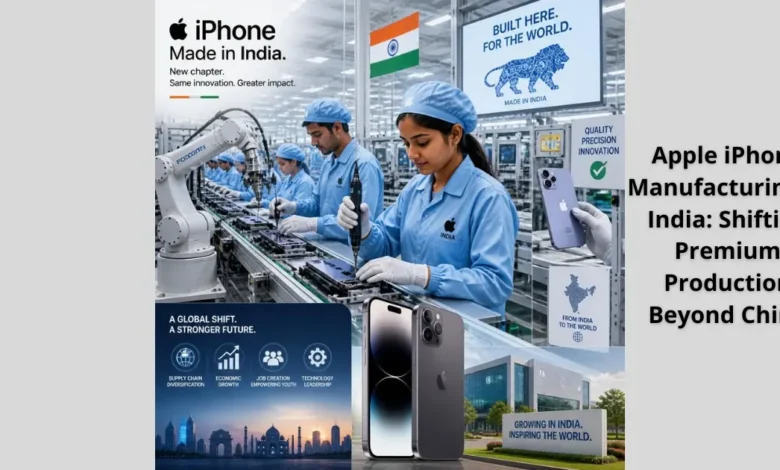
Apple iPhone manufacturing in India is entering a groundbreaking new phase as the Cupertino tech giant accelerates its global supply chain diversification. In a strategic move to de-risk its operations from China, Apple is now tasking its major manufacturing partners, Foxconn and Tata Electronics, with assembling its top-tier flagship devices—including the upcoming iPhone Pro and Pro Max models—directly on Indian soil.
Why Apple iPhone Manufacturing in India is a Strategic Pivot
For years, the South Asian nation was primarily responsible for assembling legacy or base-model iPhones. However, the recent shift toward high-end Apple iPhone manufacturing in India signals a massive vote of confidence in the country’s industrial maturity. By leveraging Foxconn’s massive infrastructure and Tata Electronics’ expanding local capabilities, Apple aims to establish a highly capable secondary hub for its most profitable hardware.
This aggressive expansion is primarily designed to feed the high-demand Western markets. Devices rolling off Indian assembly lines are being earmarked for direct export to the United States and Europe, ensuring that American consumers will soon be holding premium iPhones made outside of China’s traditional production belt.


Read Also:
Latest iPhone Rumors: Split Release Strategy, 2nm A20 Pro Chip, and iPhone Fold Leak (2026)
Tech News Radar (Latest Technology News Today) vs. TechRadar: Decoding the Blueprint of Modern System Architecture
Mitigating Risks and Embracing the Tata-Foxconn Partnership
The geopolitical necessity of this move cannot be overstated. Relying heavily on a single country for flagship production left Apple vulnerable to supply chain bottlenecks, trade tensions, and unpredictable disruptions. By scaling up Apple iPhone manufacturing in India, the company effectively builds a resilient dual-sourcing strategy that secures its holiday-season inventory.
Furthermore, the collaboration with Tata Electronics adds a powerful local dimension to Apple’s ecosystem, blending global assembly expertise with India’s domestic industrial powerhouse. As production yields continue to match Apple’s stringent quality controls, the reliance on Chinese factories will naturally diminish, paving the way for a more balanced, global manufacturing footprint.
Discover more from Tech News Radar
Subscribe to get the latest posts sent to your email.