Samsung Expands One UI 9 Testing to More Than 25 Galaxy Devices Ahead of Android 17 Rollout


(Update: Samsung has officially expanded this internal testing phase to 49 devices. Read our latest comprehensive breakdown here)
One UI 9 could mark Samsung’s fastest Android rollout yet. For Samsung Galaxy owners, software updates are just as important as new hardware launches, and millions of users across flagship, mid-range, and budget devices are eager to know when Android 17 will arrive on their phones.
Samsung appears determined to change that narrative.


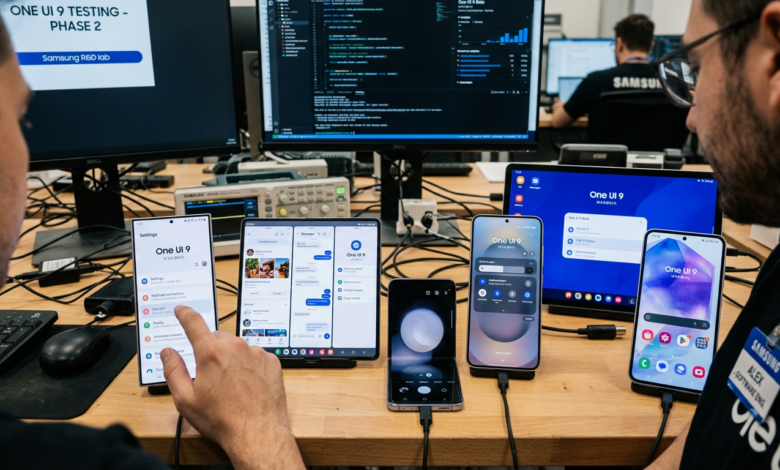
The company has significantly expanded its internal testing program for One UI 9, bringing Android 17-based firmware to more than 25 Galaxy smartphones across its flagship, mid-range, and entry-level lineups. The broader testing effort suggests Samsung is accelerating development as it prepares one of its most extensive software rollouts in recent years.
Although Samsung has not officially announced a public beta schedule, the growing number of internal test builds indicates that development has moved well beyond the earliest stages. Historically, a rapid increase in internal firmware testing has been one of the clearest indicators that public beta releases are drawing closer.
Read Also:
IOS 27 beta release date Apple Fires Up Next-Gen Mobile OS Testing Ahead of Fall Launch!
WhatsApp Usernames Are Rolling Out, Marking the Biggest Privacy Shift in the App’s History
Samsung Appears to Be Speeding Up Its Android 17 Development Cycle
Samsung has steadily improved its software update strategy over the past several years, transforming what was once considered one of Android’s slowest update programs into one of the industry’s fastest. The company’s recent commitment to extended software support has also raised expectations among Galaxy users, making timely releases more important than ever.
The latest reports suggest Samsung is following that same strategy with One UI 9. Rather than limiting early development to premium smartphones, internal testing has reportedly expanded across multiple product categories simultaneously. That approach could help Samsung identify software issues earlier while shortening the gap between flagship and mainstream device releases.
For users, the broader testing program may translate into a smoother rollout once Android 17 is officially ready.
More Than Just Flagship Phones
One of the most notable aspects of Samsung’s current testing phase is the diversity of devices involved.
Instead of focusing exclusively on the Galaxy S lineup, internal firmware has reportedly been prepared for smartphones spanning several Galaxy families, including premium flagship models as well as popular Galaxy A series devices. That suggests Samsung is allocating engineering resources across its entire smartphone portfolio rather than prioritizing only its highest-end products.
The strategy reflects a growing shift within Samsung’s software philosophy. Mid-range Galaxy phones now represent a significant portion of the company’s global smartphone sales, making software consistency across different price segments increasingly important.
If development continues at its current pace, users of eligible Galaxy A devices could see Android 17 arrive sooner than in previous software generations.
Why One UI 9 Matters Beyond Android 17
Although Android 17 provides the operating system’s underlying framework, One UI remains the experience most Galaxy owners interact with every day.
Samsung’s custom interface traditionally introduces its own visual refinements, productivity tools, security improvements, AI-powered features, and ecosystem enhancements that extend well beyond Google’s stock Android release.
While Samsung has not yet detailed every feature planned for One UI 9, the update is expected to continue the company’s focus on performance optimization, improved multitasking, stronger privacy controls, and deeper integration between Galaxy smartphones, tablets, wearables, and PCs.
As artificial intelligence becomes increasingly central to the mobile experience, industry observers also expect Samsung to expand the role of Galaxy AI features throughout the One UI ecosystem.
Faster Testing Could Mean Faster Public Releases
Samsung’s accelerated internal testing doesn’t automatically guarantee an earlier launch, but it does provide an encouraging signal.
Software development typically progresses through several stages, beginning with internal engineering builds before moving into closed testing, public beta programs, and eventually stable global releases. Expanding testing to a larger number of devices generally indicates that core platform development has reached a higher level of maturity.
If Samsung maintains its current development schedule, the company could once again position itself among the first Android manufacturers to deliver Android 17 to consumers shortly after Google’s official release.
That would further strengthen Samsung’s reputation as one of Google’s fastest ecosystem partners when it comes to major Android upgrades.
What Galaxy Users Should Expect Next
For now, Samsung has not confirmed an official release calendar for One UI 9 or announced which devices will participate in any upcoming beta program. However, the scale of the current internal testing suggests additional announcements may not be far away.
In the coming months, Galaxy owners can expect more firmware builds to surface, certification listings to appear, and beta registrations to begin opening in selected markets before the stable rollout expands globally.
Until then, Samsung’s decision to broaden One UI 9 testing across more than two dozen Galaxy devices sends a clear message: the company is pushing aggressively to make Android 17 one of its fastest and most comprehensive software updates to date.
Discover more from Tech News Radar
Subscribe to get the latest posts sent to your email.