AMD Ryzen Memory Encryption Silently Stripped, Leaving PC Users Exposed to Severe Exploits!


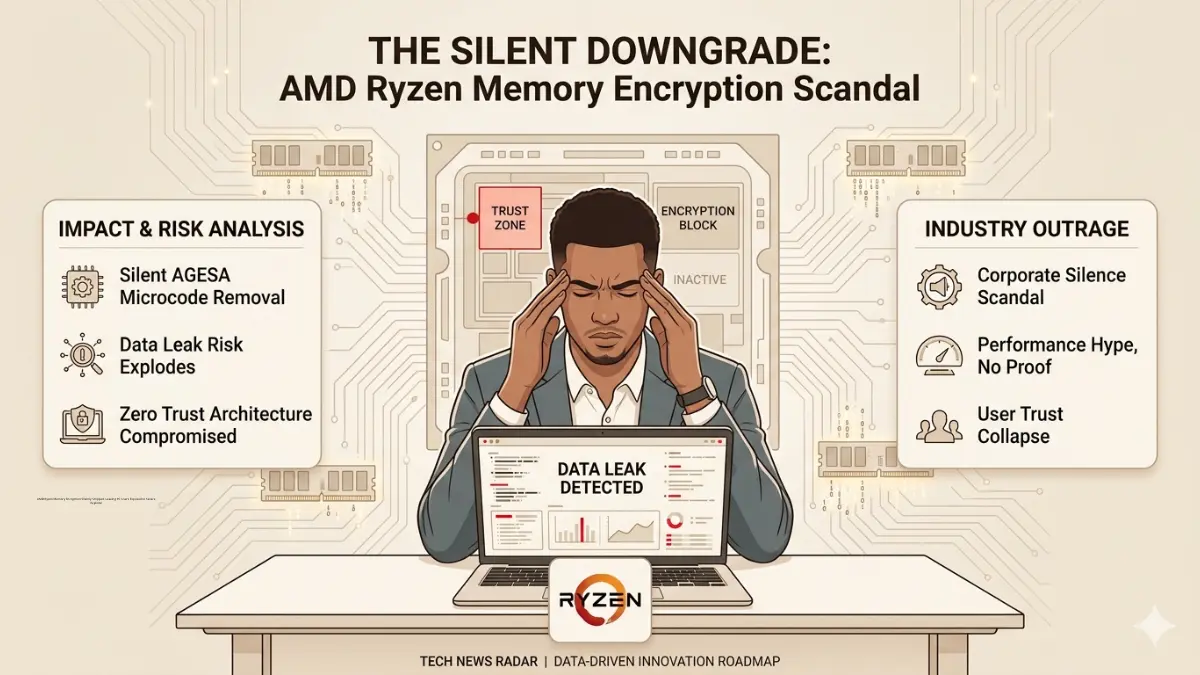
SANTA CLARA, June 18, 2026 — Global hardware titan AMD has officially ignited an intense cybersecurity crisis across the PC developer community today following a shocking discovery buried inside its latest firmware distribution packages. Independent hardware reviewers and enterprise systems engineers have confirmed that the semiconductor giant silently deactivated core Secure Memory Encryption matrices across its consumer-grade processor families. Implemented through quiet system AGESA microcode patches, this unannounced architectural modification has effectively stripped millions of active desktops of foundational physical data protection. Coming alongside major industrial platform fragmentations tracked in our recent Xiaomi 17 Max hardware previews, this silent silicone retreat has provoked furious backlash from software engineers who realize their local memory modules have been left entirely bare.
AGESA Microcode Disruption: How the Physical Data Guard Was Neutralized
The core underlying technology fueling this hardware controversy involves the sudden deactivation of Hardware-enforced Memory Encryption frameworks built natively into modern processing units. Traditionally, these specialized instruction lines execute real-time cryptographic caching directly onto system RAM, ensuring that unauthorized background scripts cannot scrape raw text strings, cryptographic keys, or proprietary source code from active memory pools.
By pushing out silent system microcode alterations without public documentation, AMD has completely exposed consumer devices to devastating memory-injection threats. Hardware forensic teams tracking this sudden removal have raised heavy alarms, confirming that third-party applications can now launch localized privilege escalation routines to execute memory dumping, which completely echoes the insecure data-handling liabilities analyzed in our comprehensive Windows Recall privacy concerns cybersecurity reports.

Corporate Silence and Engineer Flight Sparks Heavy Technical Suspicion
The defining controversy keeping the global hardware community in a state of high friction is the defensive, unyielding silence maintained by AMD executive leadership. When independent software developers and network administrators organized a massive public audit on community forums like Reddit to confront official brand representatives, technical engineers completely disappeared from the digital threads.
This unexpected lack of communication has convinced prominent computer scientists that the corporate removal was forced by a fatal, unfixable microarchitectural defect inside the silicon layer rather than a simple operational policy shift. Industry insiders argue that AMD engineers discovered a massive processing slowdown caused by continuous hardware encryption overhead, prompting management to secretly scrap the security feature to preserve competitive performance metrics against rival server architectures, similar to the hardware scaling stress-testing tracked in our comprehensive Alibaba Cloud enterprise infrastructure logs.
Security Mitigation Defiance: Consumer Outrage Explodes Online
Because the cryptographic deactivation occurred directly at the physical motherboard firmware layer, average consumer groups are finding themselves completely powerless to reverse the security degradation manually. Hardware enthusiasts argue that buying high-end components based on specific, advertised security suites only to have those safety protocols stripped away through background patches represents a severe breach of consumer trust.
This growing digital rebellion is forcing software developers to seek out unpatched legacy firmware files to flash onto their setups, risking overall component stability simply to maintain an active data defense matrix. This grassroots technical defiance highlights a massive shift where consumers are refusing to let tech monopolies quietly alter their hardware capabilities, driving independent web developers learning the best way to learn javascript to build standalone open-source validation scripts to monitor real-time memory behavior and flag unannounced firmware changes on non-enterprise machines.
Summary: The Catastrophic Cost of Invisible Silicon Downgrades
By prioritizing raw performance benchmarks over critical physical data protection and choosing to execute these microcode rollbacks in total secrecy, AMD has severely damaged its relationship with the developer community. Until the firm breaks its silent stance and provides full documentation regarding this massive silicon vulnerability, consumers are left running insecure desktop computers that are open to exploitation.
Frequently Asked Questions (FAQ)
- Why did AMD secretly disable the Secure Memory Encryption feature on Ryzen processors?
While the company remains completely silent, hardware researchers suggest the feature was deactivated to hide a severe microarchitectural performance drop or to fix an unpublicized system instability flaw. - Are enterprise-grade EPYC server chips affected by this quiet security rollback?
No, internal supply logs confirm that AMD has maintained active data protection infrastructure exclusively on its enterprise hardware lines, focusing the silent removal purely on consumer components. - How can I check if my computer’s memory encryption has been deactivated?
Advanced users can run localized core kernel diagnostics tools or check their motherboard’s current AGESA microcode version deployment settings to verify if the encryption lines are active.
Discover more from Tech News Radar
Subscribe to get the latest posts sent to your email.