Xiaomi 17 Max vs Samsung Galaxy S26 Ultra: Which Camera Beast Dominates the 2026 Flagship War?


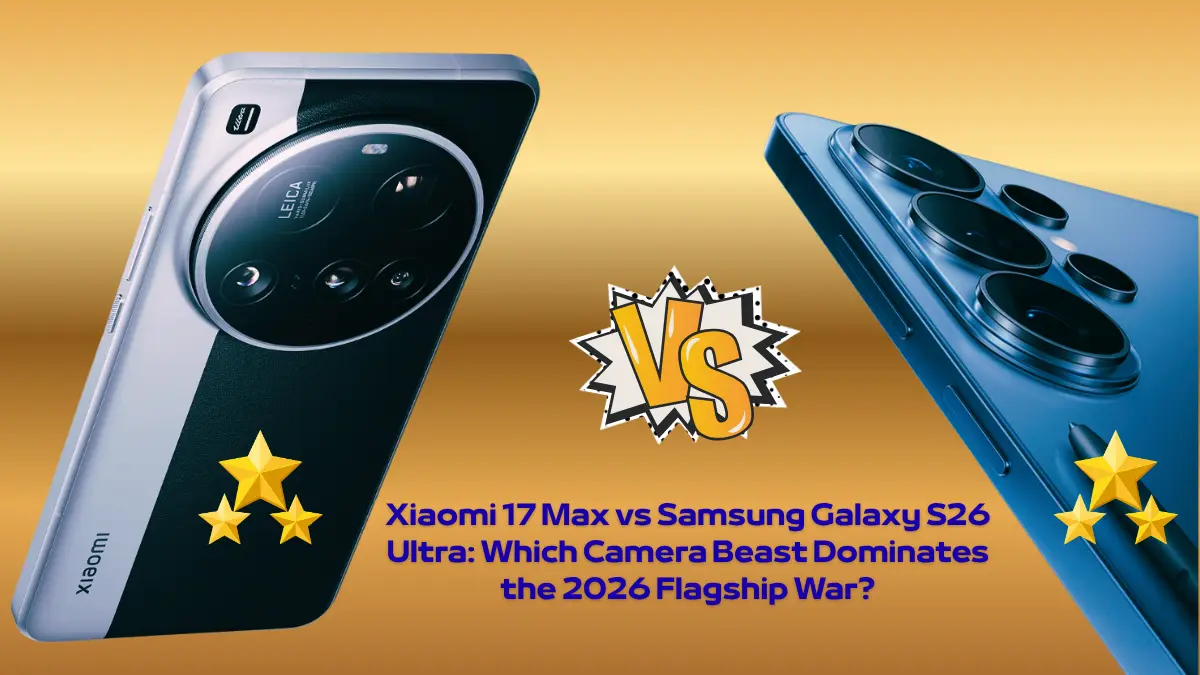
Xiaomi 17 Max vs Samsung Galaxy S26 Ultra comparison: a detailed 2026 flagship breakdown covering 200MP cameras, AI photography, Snapdragon 8 Gen 5 performance, battery life, and next-gen smartphone innovation.
Xiaomi 17 Max vs Samsung Galaxy S26 Ultra: The 2026 Flagship Battle Redefined
The smartphone industry in 2026 is defined by one of the most intense rivalries in mobile history: Xiaomi 17 Max vs Samsung Galaxy S26 Ultra.
This is not just a spec comparison. It is a clash of engineering ideologies. Xiaomi focuses on raw hardware supremacy and extreme endurance, while Samsung prioritizes AI-driven imaging, ecosystem integration, and long-term software reliability.
Both devices sit at the peak of Android innovation, but they aim at different types of power users.
Mobile Radar: Your Hub for Next-Gen Smartphone Intelligence
To stay continuously updated on flagship smartphone evolution, camera innovations, and real-world performance comparisons, you can follow our dedicated section Mobile Radar. This page is designed as a central intelligence hub that tracks the latest developments across Android and iOS ecosystems, including device leaks, benchmark analysis, and in-depth technical breakdowns of upcoming releases like Xiaomi 17 Max vs Samsung Galaxy S26 Ultra.
Explore ongoing coverage, side-by-side comparisons, and emerging mobile technologies here:
Mobile Radar
Read Also:
Xiaomi 17 Max Review: 8000mAh Battery and 200MP Camera Beast
Camera Battle: Same 200MP, Completely Different Results
Despite both devices featuring massive 200MP sensors, their imaging philosophies diverge sharply.
Xiaomi 17 Max: Hardware-Centric Imaging Dominance
The Xiaomi 17 Max uses a custom 1-inch Sony 200MP sensor designed to maximize light capture and dynamic range.
Key strengths:
- 1-inch large sensor for superior low-light performance
- Dual periscope system (5x + 10x optical zoom)
- Up to 50x AI-enhanced digital zoom
- Leica Ultra-Color Imaging Gen 4 tuning
The result is a more cinematic, natural aesthetic with strong depth and contrast, especially in night photography and portrait shots.
Samsung Galaxy S26 Ultra: AI Imaging Powerhouse
Samsung takes a computational approach with its ISOCELL 200MP sensor powered by the Snapdragon 8 Gen 5 imaging pipeline.
Key strengths:
- Advanced ISOCELL sensor tuned for AI processing
- Continuous optical zoom (3x–10x range)
- ProVisual Engine 2026 with real-time enhancement
- AI-driven noise reduction at extreme zoom levels
Samsung prioritizes consistency, especially in video recording and ultra-zoom stability.
Camera Verdict
- Xiaomi 17 Max: Best for cinematic photos, natural tones, and low-light depth
- Samsung Galaxy S26 Ultra: Best for video processing, AI enhancement, and zoom versatility
Performance and Hardware Breakdown
Both flagships use cutting-edge silicon, but their thermal and power strategies differ significantly.
Specification Overview
| Component | Xiaomi 17 Max | Samsung Galaxy S26 Ultra |
|---|---|---|
| Processor | Dimensity 9500 / Snapdragon 8 Gen 5 | Snapdragon 8 Gen 5 (For Galaxy) |
| RAM | 12GB / 16GB LPDDR6 | 12GB / 16GB LPDDR6 |
| Storage | Up to 1TB | Up to 1TB |
| Battery | 8000mAh Silicon-Carbon | 5200mAh Stacked Battery |
| Charging | 120W Wired / 50W Wireless | 45W Wired / 25W Wireless |
Real-World Performance Insight
While both devices deliver flagship-level performance, Xiaomi 17 Max vs Samsung Galaxy S26 Ultra becomes most obvious in endurance.
Xiaomi dominates battery life thanks to its massive 8000mAh silicon-carbon cell, easily delivering up to three days of heavy usage.
Samsung, however, delivers more balanced efficiency and slightly stronger AI-driven compute performance under sustained workloads.
Design and Display Philosophy
Both devices target premium users, but with different priorities in ergonomics and productivity.
Samsung Galaxy S26 Ultra: Productivity-First Design
Samsung continues its sharp titanium-inspired design with:
- Gorilla Glass Armor 2 anti-reflective coating
- Integrated S-Pen support
- Flat-edge industrial design for precision workflows
This positions it strongly in business and productivity ecosystems.
Xiaomi 17 Max: Performance-Oriented Engineering
Xiaomi focuses on thermal efficiency and immersive visuals:
- 6.82-inch curved OLED display
- 144Hz refresh rate
- Ceramic-Titanium hybrid back panel
This design prioritizes cooling efficiency and visual immersion during heavy workloads.
Software and Ecosystem Differences
The real-world experience of Xiaomi 17 Max vs Samsung Galaxy S26 Ultra depends heavily on ecosystem expectations.
Samsung Galaxy S26 Ultra: Long-Term Ecosystem Leader
Samsung provides:
- One UI 8.0 with deep optimization
- Full carrier compatibility (AT&T, Verizon, T-Mobile)
- 7 years of Android updates and security patches
This makes it the safer long-term investment.
Xiaomi 17 Max: Hardware Value Champion
Xiaomi offers:
- HyperOS 3.0 optimized for speed and efficiency
- Aggressive pricing (~$999 base model)
- Limited official US carrier optimization (import often required)
It focuses on maximum hardware per dollar rather than ecosystem depth.
Final Verdict: Xiaomi 17 Max vs Samsung Galaxy S26 Ultra
The outcome of Xiaomi 17 Max vs Samsung Galaxy S26 Ultra depends entirely on user priorities.
Choose Xiaomi 17 Max if:
- You want unmatched battery endurance (8000mAh class-leading capacity)
- You prefer natural Leica-style photography
- You want maximum hardware value at a lower price
Choose Samsung Galaxy S26 Ultra if:
- You need full global carrier support and stability
- You rely on long-term software updates and ecosystem integration
- You want the strongest AI camera system and productivity tools
Conclusion: Two Flagships, Two Philosophies
The battle of Xiaomi 17 Max vs Samsung Galaxy S26 Ultra represents more than a spec war—it reflects two fundamentally different visions of smartphone engineering.
Xiaomi pushes raw endurance and hardware dominance, while Samsung refines intelligence, software longevity, and ecosystem strength.
In 2026, there is no absolute winner—only the right choice for the right user.
Sources & References
The technical details and comparisons discussed in this article are based on a combination of official manufacturer announcements, chipset disclosures, and industry reporting from leading technology publications. For further verification and deeper reading, you can refer to the following external sources:
- Samsung Official Newsroom — Official announcements and product information regarding Galaxy Ultra devices, camera systems, and One UI developments.
- Xiaomi Global Official Site — Official Xiaomi product pages, specifications, and HyperOS ecosystem updates for flagship smartphones.
- Qualcomm Snapdragon Platform Overview — Technical documentation for Snapdragon mobile platforms, including AI processing and ISP capabilities.
- GSMArena Smartphone Database — Independent specification database and comparison reference for flagship smartphone hardware.
- Android Authority Tech Coverage — Industry analysis and hands-on evaluations of Android flagship devices and camera technologies.
Discover more from Tech News Radar
Subscribe to get the latest posts sent to your email.