High-Res Vision: It features a 3x resolution boost (up to 3.75 megapixels) for precise chart reading and pixel-perfect architectural mapping.
Price Stability: Anthropic maintains the pricing at $5 per million input tokens and $25 per million output tokens.
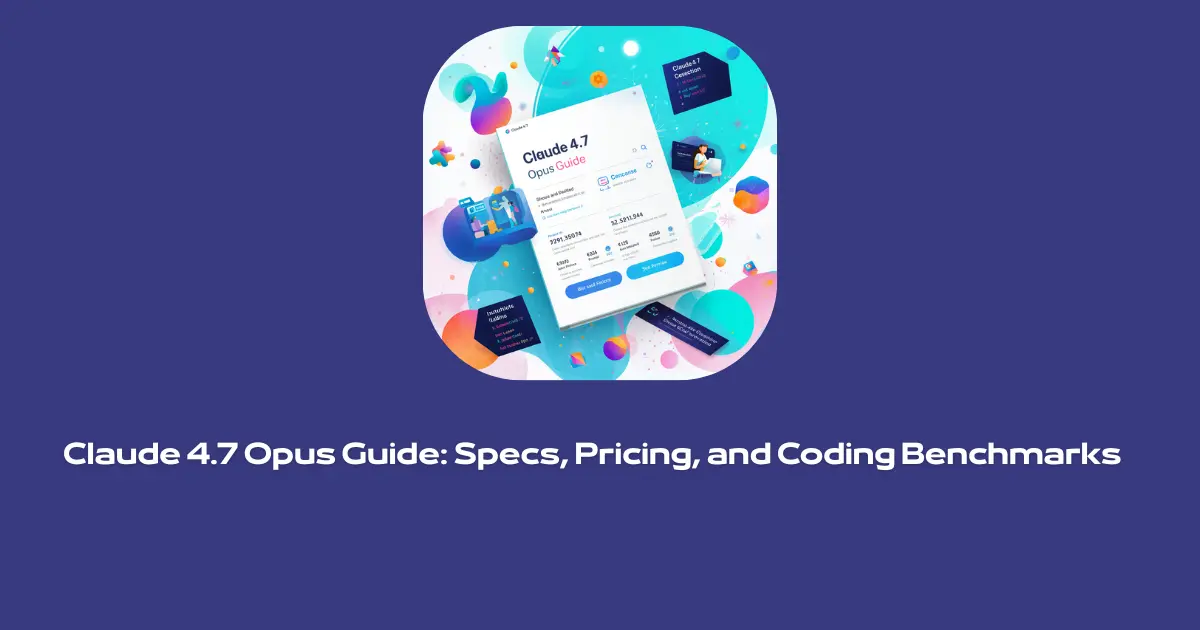
LOS ANGELES, May 21, 2026 — Claude 4.7 Opus has officially been unveiled by Anthropic, marking a monumental leap forward in the race for true autonomous artificial intelligence. Designed as a direct upgrade to the 4.6 version, this next-generation model is specifically engineered to handle complex programming, long-context data analysis, and multi-step agentic workflows without requiring constant human intervention. As the industry adapts to the massive changes announced at Google I/O 2026, Anthropic’s latest release cements its position as a primary tool for developers globally. If you want to know how this new titan reshapes entertainment tech and software engineering, this deep dive into Claude 4.7 Opus will cover everything you need to know.
Coding Breakthroughs and Intelligent Task Budgets
The true power of Claude 4.7 Opus lies in its unprecedented coding capabilities and autonomous execution. The model achieved a groundbreaking 64.3% score on the highly complex SWE-bench Pro, which tests AI on real-world software engineering issues. For developers looking for the best way to learn javascript or build advanced enterprise systems, Anthropic has introduced an “xhigh” reasoning tier. This allows users to set the thinking effort to maximum for deep system engineering. Furthermore, the model features native “Task Budgets,” displaying a real-time token consumption countdown during autonomous loops. This allows Claude 4.7 Opus to prioritize tasks and finish long workflows efficiently without exceeding financial limits.
Ultra-High-Resolution Vision and Literal Command Compliance
In addition to its logic upgrades, Claude 4.7 Opus introduces a massive visual overhaul. It is the first model in the Claude lineup to support high-resolution image processing up to 3.75 megapixels (2576 pixels), a 3x increase from previous versions. This 1:1 pixel mapping enables the model to read dense computer screenshots, technical schematics, and complex financial charts with perfect accuracy. When it comes to processing text, the model maintains a massive 1-million-token context window. However, developers should note that Claude 4.7 Opus follows instructions with absolute literalness. Legacy prompts may need tweaking, as the model will no longer guess human intent—it executes exactly what is written.


Summary: The Ultimate Tool for the AI Era
Whether you are upscaling content for the best 4K projectors for horror fans or managing complex database code, Claude 4.7 Opus provides the scale and precision needed for 2026’s tech landscape. It is currently available via the Claude API, Amazon Bedrock, and Google Cloud Vertex AI.
Frequently Asked Questions (FAQ)
How much does Claude 4.7 Opus cost to use?
Anthropic has kept the pricing identical to the previous version: $5 per million input tokens and $25 per million output tokens.
What is the “xhigh” reasoning tier in Claude 4.7 Opus?
It is a developer setting that allocates maximum computing power to the model’s internal thinking process for complex bug fixing and system architecture.
Can Claude 4.7 Opus read technical blueprints?
Yes, thanks to its new 3.75-megapixel high-resolution vision engine, it can map and interpret detailed technical and chemical diagrams accurately.