WhatsApp Usernames Are Rolling Out, Marking the Biggest Privacy Shift in the App’s History


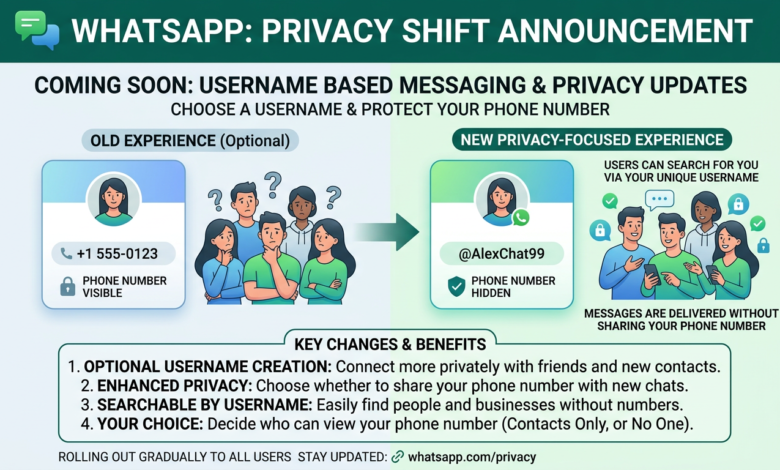
WhatsApp usernames are finally changing how people connect on the world’s largest messaging app. For more than 15 years, one rule has defined the WhatsApp experience: if someone wanted to message you, they needed your phone number. That requirement has shaped everything from personal conversations to business communication, but it has also created one of the platform’s biggest privacy concerns.
Meta is now changing that formula.
The company has officially begun rolling out WhatsApp usernames, introducing what may be the most significant identity update in the messaging platform’s history. Instead of relying exclusively on phone numbers, users will gradually be able to communicate through unique usernames, giving them greater control over how they share their identity while bringing WhatsApp closer to competing messaging platforms that have long offered username-based communication.


The update doesn’t eliminate phone numbers entirely. Instead, it changes when they’re exposed. Users will still need a valid phone number to create and verify a WhatsApp account, but once a username has been set up, new conversations can begin without revealing that number to other people. For many users, particularly those participating in community groups, online marketplaces, or professional discussions, that represents a meaningful improvement in personal privacy.
A Long-Requested Privacy Feature Finally Arrives
For years, privacy advocates and everyday users have argued that requiring a phone number for every interaction created unnecessary exposure. Joining a public community or messaging someone for the first time often meant sharing personal contact information with complete strangers.
The new username system addresses that issue by separating account verification from public identity. While WhatsApp will continue using phone numbers behind the scenes for account registration and security, usernames become the public-facing identity that other users see when starting a new conversation.
Unlike many social platforms, however, WhatsApp isn’t turning usernames into a searchable public directory. Meta says users won’t be discoverable through a global search database, meaning someone must already know your exact username before they can initiate a conversation. That decision appears designed to balance discoverability with the platform’s long-standing emphasis on private communication.
Read Also:
Qatar Bets Big on Space Connectivity With $347 Million Es’hail-3 Satellite Partnership
IOS 27 beta release date Apple Fires Up Next-Gen Mobile OS Testing Ahead of Fall Launch!
How WhatsApp Usernames Work
The new identity system follows a relatively simple structure. Every username begins with the familiar @ symbol and must contain between three and thirty-five characters. Once a unique name is selected and confirmed, it becomes the identifier other users can use to contact you without needing your phone number.
Meta is also integrating usernames across its broader ecosystem. Businesses, creators, and public organizations that already maintain verified identities on Facebook and Instagram are expected to benefit from reserved naming protections, reducing the likelihood of impersonation and helping users recognize legitimate accounts across multiple Meta services.
For everyday users, the experience remains familiar. Messages, calls, media sharing, and end-to-end encryption continue to function exactly as before. The primary difference is that the first interaction no longer requires exposing a personal phone number.
The Privacy Benefits Are Clear—But So Are the Risks
The rollout has generated widespread discussion among cybersecurity professionals, digital privacy advocates, and regulators, largely because the feature introduces both meaningful security improvements and entirely new challenges.
Supporters argue that hiding phone numbers significantly reduces the risk of SIM swap attacks, one of the most damaging forms of identity theft affecting smartphone users today. In many cases, attackers first obtain a victim’s phone number before attempting to hijack it through a mobile carrier. Reducing the number of situations where users must publicly share their phone number could make those attacks more difficult to execute.
The update may also improve privacy inside large WhatsApp Communities, workplace groups, educational organizations, and public events. Users who previously hesitated to participate because their phone number would become visible may now feel more comfortable engaging with people they don’t know personally.
At the same time, security experts warn that username-based systems create different risks.
One of the biggest concerns involves impersonation. Criminals frequently register usernames that closely resemble well-known brands, public figures, or even family members, hoping victims overlook small spelling differences. Similar tactics have been widely documented on social media platforms, making proactive identity protection a key challenge for WhatsApp as adoption expands.
Some regulators have also expressed concerns that reducing the visibility of phone numbers could complicate certain fraud investigations, particularly in cases involving phishing campaigns, financial scams, or organized cybercrime. Those concerns are likely to remain part of the broader debate as the rollout continues worldwide.
Meta Is Building Multiple Layers of Protection
Recognizing those concerns, Meta has introduced several security mechanisms designed to make the new identity system more resistant to abuse.
Among the most notable additions is the Username Key, an optional security feature that adds a four-digit PIN to a user’s public username. When enabled, someone who knows your username must also enter the correct security code before they can begin a new conversation with you. The feature effectively creates an additional verification layer, particularly useful for public figures, journalists, business owners, and anyone concerned about unwanted contact.
WhatsApp is also deploying automated systems intended to detect suspicious behavior, including repeated attempts to guess usernames or send unsolicited messages to large numbers of unfamiliar users. Accounts exhibiting patterns commonly associated with spam or phishing may face restrictions before they can reach additional users.
Meta has further confirmed that many government organizations, major brands, and high-profile entities have had sensitive usernames reserved in advance to reduce the risk of impersonation during the rollout.
How to Claim Your WhatsApp Username
The feature is being released gradually, so not every account will receive immediate access. Users who are included in the rollout can create a username directly from the WhatsApp mobile app by opening Settings, selecting their profile, and choosing the new Username option when it becomes available.
At launch, the feature is limited to WhatsApp on Android and iPhone. Support for WhatsApp Web and desktop clients has not yet been broadly introduced, although broader platform integration is expected as the rollout progresses.
Users also retain full control over their identity. A username can be changed later, replaced with a different one if available, or removed altogether, allowing users to return to phone number-based communication if they prefer.
Why This Update Matters
WhatsApp usernames represent more than just another convenience feature—they signal a fundamental shift in how the world’s largest messaging platform approaches digital identity.
For years, Meta prioritized simplicity by making phone numbers the foundation of every WhatsApp account. That approach helped verify users but also blurred the line between authentication and public identity. By separating those two functions, WhatsApp is moving toward a model that gives users greater privacy without abandoning the security benefits of phone number verification.
The transition also reflects broader changes across the messaging industry, where privacy, identity protection, and user control have become increasingly important competitive advantages.
While the rollout will take time to reach billions of users, WhatsApp usernames could ultimately become one of the platform’s most significant changes since the introduction of end-to-end encryption—reshaping how people connect while keeping one of their most valuable pieces of personal information out of everyday conversations.
Discover more from Tech News Radar
Subscribe to get the latest posts sent to your email.