Thinking of buying a Starlink dish in 2026? Compare every Starlink hardware option, pricing, monthly plans, hidden costs, and discover which model is actually worth your money.
Thinking of Buying a Starlink Dish in 2026? Here’s Everything You Need to Know Before You Spend a Dollar
For years, buying satellite internet meant accepting compromises. Slow download speeds, frustrating latency, expensive contracts, and bulky equipment made it an option of last resort for people living beyond the reach of cable or fiber. Starlink changed that conversation almost overnight.
Powered by SpaceX’s rapidly expanding low Earth orbit satellite constellation, Starlink has become the first satellite internet service that many Americans genuinely compare with traditional broadband providers. Whether you’re living on a ranch in Montana, working remotely from the mountains of Colorado, traveling full-time in an RV across the Southwest, or simply looking for a dependable backup internet connection, Starlink has likely appeared somewhere on your shortlist.
But here’s where many first-time buyers make an expensive mistake.
They assume every Starlink kit delivers the same experience.
It doesn’t.
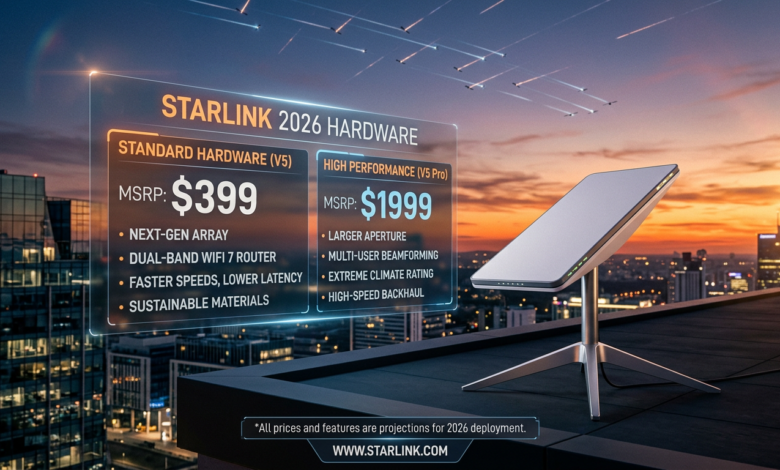
Today’s Starlink ecosystem includes several hardware options, each designed for a different type of customer. Some models prioritize affordability, others focus on mobility, while premium hardware is built specifically for businesses operating in harsh weather or demanding environments. Choosing the wrong equipment could mean paying hundreds—or even thousands—of dollars for capabilities you’ll never use.
That’s exactly why this guide exists.
Instead of simply listing technical specifications, we’ll explain how each Starlink dish performs in real-world situations, who should buy it, what hidden costs you should expect after checkout, and whether it’s actually worth the investment in 2026.
By the time you finish reading, you should know exactly which Starlink hardware belongs on your roof, your RV, or your backpack—and which models you can confidently skip.
Why Starlink Has Become One of America’s Most Popular Internet Choices
The biggest reason Starlink has gained momentum isn’t just speed—it’s accessibility.
Across the United States, millions of households still lack access to reliable fiber or cable infrastructure. Rural communities often depend on aging DSL networks, expensive wireless providers, or older satellite services that struggle with high latency and inconsistent performance.
Starlink approaches the problem differently.
Instead of transmitting data from satellites positioned tens of thousands of miles above Earth, SpaceX relies on thousands of low Earth orbit satellites traveling much closer to the planet. That shorter distance dramatically reduces latency while allowing users to enjoy broadband speeds that were once unimaginable for satellite internet.
The result is an internet connection capable of supporting remote work, video conferencing, 4K streaming, online gaming, and cloud-based productivity from locations that previously had few realistic alternatives.
This shift has transformed Starlink from a niche solution into a mainstream broadband option for homeowners, digital nomads, outdoor enthusiasts, emergency responders, and small businesses alike.
Which Starlink Dish Should You Buy?
The answer depends less on your budget than on how you actually plan to use the service.
Someone replacing slow DSL at a permanent residence has very different needs than a couple traveling across the country in an RV. Likewise, a commercial fishing vessel or construction company operating in remote environments requires hardware that can tolerate conditions ordinary residential users will never encounter.
Rather than assuming the most expensive equipment automatically delivers the best value, it’s far more useful to match the hardware to your lifestyle.
For most American households, one model stands out as the clear winner.
Starlink Standard Gen 3: The Smart Choice for Most Homeowners
If you’re shopping for Starlink today, the Standard Gen 3 kit is almost certainly the model you’ll end up buying—and for good reason.
Unlike earlier generations that relied on motorized positioning systems to automatically align with satellites, the newest design embraces a simpler, flatter architecture with fewer moving parts. At first glance, eliminating internal motors might seem like a downgrade, but the opposite is true.
Mechanical components eventually wear out. Motors can fail. Additional moving parts introduce maintenance concerns over time. By replacing the older motorized design with a fixed-position antenna capable of electronically tracking satellites, SpaceX has created hardware that’s both more durable and easier to install.
For homeowners, this translates into a cleaner installation, improved long-term reliability, and fewer potential failure points after years of continuous outdoor exposure.
The improvements don’t stop with the antenna itself.
The included router has also received meaningful upgrades, supporting Wi-Fi 6 technology and delivering stronger wireless performance throughout larger homes. Previous Starlink customers frequently purchased third-party networking equipment shortly after installation because the bundled router struggled to cover multiple rooms consistently. While larger homes may still benefit from mesh networking systems, the newest hardware provides a noticeably better out-of-the-box experience than earlier generations.
Performance is equally impressive.
Depending on network congestion, local satellite density, and environmental conditions, many users experience download speeds easily capable of supporting multiple simultaneous 4K streams, large software downloads, cloud backups, and demanding video conferencing workloads. More importantly, latency remains low enough that activities once considered impractical on satellite internet—such as competitive gaming and real-time collaboration—have become increasingly realistic for many customers.
For families replacing outdated rural internet connections, the Standard Gen 3 strikes an excellent balance between price, simplicity, and long-term performance.
Who Will Benefit Most from the Standard Gen 3?
The Standard Gen 3 isn’t designed to be everything for everyone, but for permanent residential installations, it’s difficult to recommend anything else.
Homeowners living beyond the reach of fiber infrastructure will appreciate its ability to deliver broadband-like performance without depending on aging telephone lines or overloaded wireless towers. Remote professionals working from home gain enough bandwidth to support virtual meetings, cloud applications, and large file transfers without constantly worrying about connection stability.
Even households with multiple internet users can comfortably stream movies, browse the web, participate in online classes, and connect smart home devices simultaneously, provided local network conditions remain favorable.
In short, unless your lifestyle requires constant mobility, the Standard Gen 3 is likely the Starlink hardware that offers the strongest overall value.
Starlink Mini: The Mobile Internet Revolution for Travelers and Remote Work
If the Standard Gen 3 represents Starlink’s answer to home broadband, then the Starlink Mini represents something far more disruptive: a genuinely portable high-speed internet system that doesn’t feel like satellite internet at all.
For years, mobile connectivity outside major coverage zones came with a familiar compromise. You either relied on weak cellular hotspots that throttled after a few gigabytes, or you invested in expensive mobile satellite systems that were heavy, power-hungry, and painfully slow by modern standards. The Starlink Mini changes that equation in a way that feels almost unfair compared to what existed just a few years ago.
What makes the Mini so compelling isn’t just its reduced size. It’s the fact that Starlink has redesigned the entire system architecture around mobility rather than scaling down a residential product. That distinction matters more than most buyers realize.
Instead of requiring multiple separate components, complex cabling, and a fixed installation, the Mini consolidates connectivity into a far more compact and travel-friendly system. It is designed for users who don’t stay in one place long enough to justify permanent infrastructure, yet still expect broadband-level performance wherever they go.
Why the Starlink Mini Feels Different From Traditional Satellite Internet
The first thing most users notice is not the speed—it’s the simplicity.
Traditional satellite internet setups typically involve multiple external components, including a dish, router, power supply, and various mounting accessories that need to be carefully positioned and secured. The Mini eliminates much of that friction by integrating key networking components directly into the system architecture.
In practical terms, this means fewer cables, fewer setup steps, and significantly less time between unpacking the device and actually getting online.
For RV travelers crossing the United States, this difference is critical. Instead of treating internet access as a planned setup process at each stop, the Mini allows connectivity to become something that simply exists in the background of travel. You arrive, place the device, power it on, and within minutes you’re connected.
This shift transforms how people think about remote work, travel, and digital independence.
Real-World Use Cases: Where the Starlink Mini Actually Makes Sense
The Starlink Mini is not designed for everyone, and that’s precisely why it stands out.
For digital nomads moving between short-term stays, it replaces the constant search for reliable Wi-Fi. Coffee shops, hotel networks, and public hotspots become optional rather than essential. Work can continue uninterrupted whether you are parked near a desert highway, deep in a forested campground, or staying in a remote coastal region.
For RV owners and overlanders, the Mini introduces something that previously felt unrealistic: consistent high-speed connectivity in motion-oriented lifestyles. While performance will always depend on satellite visibility and environmental conditions, the ability to maintain stable access across large geographic regions is a major leap forward compared to legacy mobile solutions.
Even emergency preparedness users have begun adopting the Mini as a backup communication layer. In scenarios where cellular networks fail due to natural disasters or infrastructure outages, having a portable satellite connection can provide a critical communication lifeline.
Power Consumption and Practical Limitations
Despite its advantages, the Starlink Mini still operates within the physical constraints of satellite communication systems.
Power consumption remains a key consideration for mobile users who rely on batteries, portable power stations, or solar setups. While Starlink has optimized the system for lower energy usage compared to larger residential hardware, sustained operation still requires careful planning in off-grid environments.
This is where many first-time buyers miscalculate.
They focus on portability but underestimate energy logistics. Unlike a smartphone or cellular hotspot, satellite connectivity requires a continuous power draw to maintain stable communication with orbiting satellites. For RV owners or campers relying on limited energy reserves, this means pairing the Mini with a properly sized portable power station becomes essential rather than optional.
The same applies to mounting and positioning. While the system is more flexible than fixed residential hardware, satellite visibility still matters. Obstructions such as dense tree cover, canyon walls, or urban structures can significantly affect performance.
Who Should Buy the Starlink Mini in 2026?
The Mini is best understood not as a cheaper version of Starlink, but as a different category of product entirely.
It is ideal for users whose internet needs move with them rather than staying in one location. This includes long-distance RV travelers, remote field workers, outdoor content creators, and individuals who spend extended periods outside traditional network coverage zones.
For stationary households, however, the Mini rarely makes financial or practical sense. The performance-per-dollar ratio favors the Standard Gen 3 for fixed installations, both in terms of speed consistency and long-term reliability.
In short, if your lifestyle is mobile, the Mini feels transformative. If your lifestyle is static, it feels unnecessary.
Starlink Mini vs Standard Gen 3: The Real Difference
Although both systems operate on the same satellite network, their design philosophy is fundamentally different.
The Standard Gen 3 is optimized for continuous, fixed-location broadband replacement. It assumes a stable installation environment, consistent power supply, and permanent usage patterns.
The Mini, on the other hand, assumes uncertainty. It is built for movement, temporary setups, and changing environments where traditional infrastructure does not exist.
This difference becomes especially important when evaluating long-term value. Buyers often compare specifications directly, but the real decision should be based on usage behavior rather than technical overlap.
If your internet connection needs to remain stable in a single location for years, the Standard Gen 3 is the logical choice. If your connectivity needs follow you across states, climates, and remote terrain, the Mini becomes significantly more compelling.
Accessories That Matter More Than Most Buyers Expect
One of the most overlooked aspects of Starlink ownership is the supporting ecosystem around the hardware itself.
While the Mini is designed for portability, real-world usage often requires additional equipment to maximize reliability and convenience. Portable power stations, rugged carrying cases, and mounting accessories quickly become essential components of a complete mobile setup.
For example, users frequently underestimate the importance of maintaining consistent power delivery during extended use. Without a properly sized external battery system, connectivity becomes limited by energy availability rather than satellite coverage.
Similarly, physical protection becomes important for users who frequently transport the device. While the hardware is designed for outdoor conditions, repeated travel introduces risks that stationary users never encounter.
These accessories are not optional upgrades for serious mobile users—they are part of the practical cost of ownership.
Mini Bottom Line: Freedom at a Cost
The Starlink Mini delivers something that was previously difficult to achieve in the consumer satellite internet space: true portability without sacrificing usable broadband performance.
However, that freedom comes with trade-offs. Power planning, environmental awareness, and accessory investment all play a larger role than they do in traditional home-based setups.
For the right user, those trade-offs are absolutely worth it. For others, they introduce complexity that outweighs the benefits.
The key is not whether the Mini is powerful enough—it clearly is—but whether your lifestyle actually requires mobility at this level.
Starlink Flat High Performance: Built for Businesses, Harsh Weather, and Mission-Critical Connectivity
Not every Starlink customer is looking for a simple residential internet replacement. Some rely on internet access to operate a business, manage remote infrastructure, coordinate field teams, or maintain communication in environments where network interruptions simply aren’t acceptable.
That’s exactly where the Starlink Flat High Performance system enters the picture.
At first glance, its price tag can be difficult to justify. It costs several times more than the Standard Gen 3 kit, leading many buyers to assume it’s simply an upgraded version of the residential hardware. In reality, it’s an entirely different class of equipment engineered for demanding operating conditions rather than everyday household use.
The larger antenna surface provides improved satellite acquisition and tracking, allowing the system to maintain stronger connections in situations where standard residential hardware may experience reduced performance. This becomes especially valuable in regions that experience heavy snowfall, frequent rainstorms, coastal weather, or environments where uninterrupted connectivity directly affects productivity and revenue.
Commercial fleets, emergency response organizations, maritime operators, mining companies, construction firms, and research facilities are among the customers who benefit most from this hardware. In these situations, the additional investment is often insignificant compared to the financial impact of losing internet connectivity during critical operations.
For the average homeowner, however, the Flat High Performance system is usually excessive. While it delivers exceptional reliability, most households simply won’t encounter the environmental or operational challenges that justify its premium price.
Understanding Starlink Pricing in 2026
One of the biggest misconceptions surrounding Starlink is that purchasing the hardware is the only major expense. In reality, the equipment represents just the first step in the overall investment.
Beyond the initial hardware purchase, buyers also need to consider monthly service plans, installation accessories, optional networking equipment, and, in some cases, professional installation costs. Understanding these expenses before placing an order helps avoid unexpected surprises after the hardware arrives.
The following table provides a simplified overview of Starlink’s primary hardware options and their intended audiences.
| Hardware | Best For | Relative Hardware Cost | Typical Monthly Plan | Portability |
|---|---|---|---|---|
| Standard Gen 3 | Homes and remote workers | Moderate | Residential Plan | Low |
| Starlink Mini | Travelers, RV owners, digital nomads | Lower initial cost | Roaming Plans | Excellent |
| Flat High Performance | Business, maritime, industrial use | Premium | Business Plans | Limited |
While hardware prices and subscription plans occasionally change, the overall purchasing strategy remains the same: choose the hardware that matches your lifestyle rather than simply buying the most expensive option available.
The Hidden Costs Most First-Time Buyers Don’t Consider
One of the reasons Starlink receives mixed reviews online has little to do with the internet service itself. Instead, many new customers underestimate the total cost of building a complete installation.
The hardware kit gets you connected, but it doesn’t always provide everything needed for the clean, permanent setup most homeowners envision.
For example, roof installations frequently require dedicated mounting systems designed for chimneys, fascia boards, poles, or metal roofing. Depending on the layout of the property, the supplied cable may also be shorter than necessary, making an extension or alternative routing solution essential.
Inside the home, Wi-Fi coverage presents another common challenge. Although the latest Starlink router offers noticeable improvements over previous generations, larger homes with multiple floors or thick interior walls often benefit from a mesh Wi-Fi system that distributes the connection more effectively throughout the property.
Professional installation is another factor some buyers overlook. While many homeowners complete the installation themselves, properties with difficult roof access or complex cable routing may require assistance from a qualified installer, adding to the total ownership cost.
None of these expenses are unique to Starlink, but accounting for them beforehand allows buyers to build a realistic budget instead of focusing solely on the advertised hardware price.
Building a Better Starlink Setup
One advantage of the broader Starlink ecosystem is the availability of high-quality third-party accessories that improve both installation and long-term usability.
For residential users, professionally engineered roof mounts often provide better positioning than temporary ground installations, reducing signal obstructions caused by nearby trees or buildings. Ethernet accessories can simplify integration with existing home networking equipment, while mesh Wi-Fi systems extend reliable coverage into garages, home offices, and outdoor living spaces.
Travelers using the Starlink Mini have different priorities. Rugged carrying cases help protect the hardware during transport, while portable power stations make extended off-grid operation far more practical. Many experienced RV owners also invest in adjustable mounting solutions that allow faster deployment at campsites with limited open sky visibility.
Rather than treating these accessories as optional upgrades, experienced Starlink users often view them as investments that maximize the value of the hardware they’ve already purchased.
Is Starlink Worth Buying in 2026?
For many Americans, the answer is yes—but not for the reasons you might expect.
If your home already has access to affordable fiber internet delivering symmetrical multi-gigabit speeds, Starlink is unlikely to replace that experience. Fiber remains the benchmark for raw performance, consistency, and long-term value in densely populated areas.
However, millions of households don’t have that luxury.
In rural communities, mountain towns, remote cabins, and expanding suburban developments where traditional broadband remains unavailable or unreliable, Starlink offers something remarkably close to urban internet quality without waiting years for infrastructure expansion.
The same applies to people whose work depends on mobility. Digital creators, traveling healthcare professionals, engineers, journalists, surveyors, emergency responders, and RV travelers increasingly view Starlink as an essential productivity tool rather than a luxury.
The technology is no longer aimed exclusively at early adopters. It has matured into a practical broadband solution capable of serving a wide variety of residential, professional, and recreational users.
Frequently Asked Questions
Which Starlink dish is best for most homeowners?
The Standard Gen 3 remains the best overall choice for permanent residential installations because it balances performance, reliability, and long-term value better than any other model in the current lineup.
Is the Starlink Mini fast enough for remote work?
Yes. Under favorable conditions, the Starlink Mini provides sufficient bandwidth for video conferencing, cloud applications, remote collaboration, and everyday productivity tasks, making it an excellent option for travelers and digital nomads.
Should businesses buy the Flat High Performance system?
Organizations operating in demanding environments or locations where uninterrupted connectivity is critical will benefit most from the Flat High Performance hardware. For typical residential users, however, its additional cost is usually difficult to justify.
Can Starlink completely replace cable internet?
For many rural households, absolutely. In areas where cable or fiber infrastructure remains unavailable, Starlink has become one of the strongest broadband alternatives currently available.
Final Verdict
Buying Starlink in 2026 is no longer simply about gaining access to satellite internet—it’s about choosing the right hardware for the way you live and work.
The Standard Gen 3 continues to be the smartest purchase for the majority of homeowners, delivering dependable broadband performance without unnecessary complexity. The Starlink Mini opens the door to reliable internet almost anywhere, making it an outstanding companion for travelers and remote professionals who refuse to depend on unreliable public Wi-Fi. Meanwhile, the Flat High Performance system serves a much smaller audience, but for businesses operating in harsh or mission-critical environments, its premium cost is justified by enhanced resilience and stability.
Before making your purchase, consider not only the hardware itself but also the installation environment, your expected monthly usage, and the accessories that will help you get the most from your investment. Taking a few extra minutes to match the right Starlink system to your specific needs can save both money and frustration in the long run.
Ultimately, the best Starlink dish isn’t the most expensive one—it’s the one that fits your lifestyle.
Discover more from Tech News Radar
Subscribe to get the latest posts sent to your email.