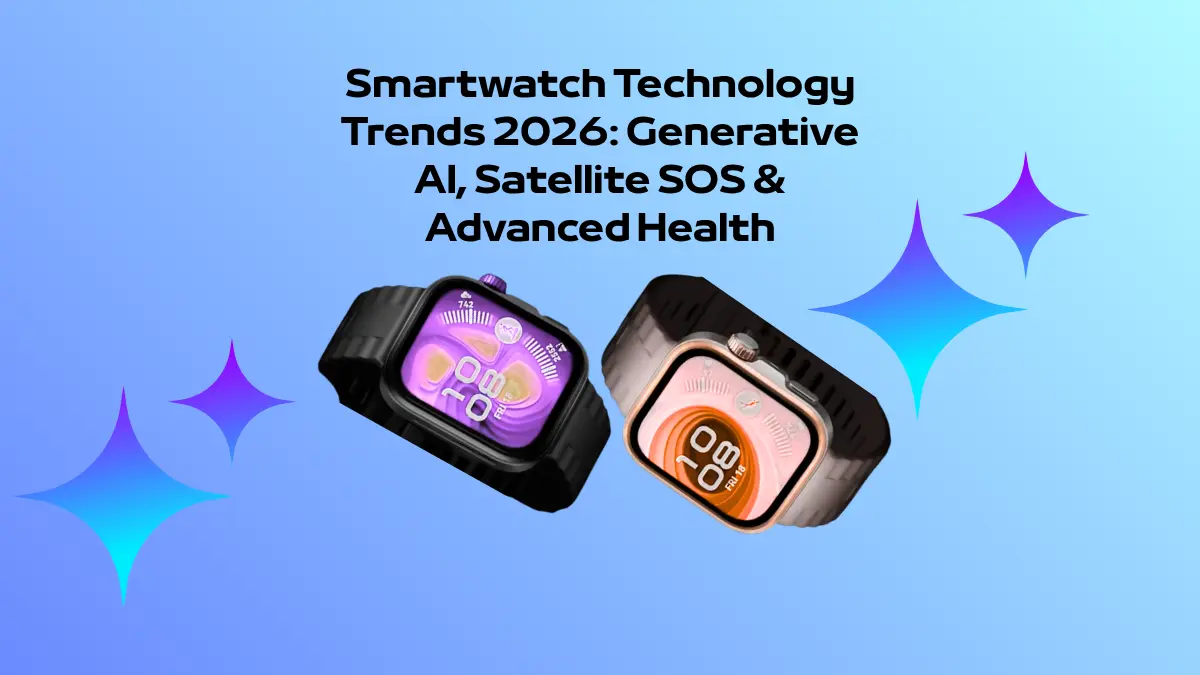
The global wearable market is undergoing a massive paradigm shift, moving far beyond basic step-tracking and smartphone notifications. In 2026, the latest smartwatch technology trends 2026 focus on deep integration with generative artificial intelligence (AI), direct-to-device satellite connectivity, and breakthrough medical-grade health monitoring sensors. These advancements are transforming modern smartwatches from optional tech accessories into indispensable lifelines and personalized health clinics on the wrist.
Medical-Grade Health Monitoring & Generative AI Coaches
The most impactful element driving consumer interest in smartwatch technology trends 2026 is the evolution of onboard biometric sensing. Wearable devices have officially crossed the threshold into medical-grade diagnostic capabilities:
- Sleep Apnea Detection: This feature has become a standardized baseline tool across premium ecosystems, constantly analyzing sleep quality, blood oxygen drops, and respiratory patterns to warn users of potential chronic health risks.
- Continuous Blood Pressure Tracking: Moving past static inflatables, latest flagships like the Huawei Watch D2 now offer accurate, uninterrupted blood pressure monitoring directly from the wrist utilizing sophisticated micro-pumps embedded within the strap.
- Generative AI Health Coaches: Next-generation lineups, including the Samsung Galaxy Watch 8, feature custom generative AI integration. Rather than giving raw data, these algorithms act as personal wellness coaches, translating daily sleep metrics and physical exertion profiles into highly tailored, actionable lifestyle advice.
Read Also:

Google and XREAL Unveil Project Aura: The First True Android XR Spatial Glasses
Claude 4.7 Opus Guide: Specs, Pricing, and Coding Benchmarks
The Connectivity Revolution: Satellite SOS & Real-Time AI Assistants
Emergency safety and localized processing power have taken a massive leap forward in recent hardware configurations, introducing cellular independence when off the grid:
- Satellite SOS Integration: Direct satellite connection is no longer exclusive to rugged smartphones. Ultra-premium flagship wearables like the Apple Watch Ultra 3 and Google Pixel Watch 4 now boast standalone satellite emergency text messaging, allowing adventurers to dispatch rescue coordinates even in complete dead zones.
- Raise-to-Talk Generative AI: Relying on physical buttons to trigger assistants is becoming a legacy setup. Operating systems now natively support a natural “Raise to Talk” gesture that instantly awakens advanced multimodal models like Google Gemini, allowing users to execute complex voice commands flawlessly.
Sustainable Engineering: Repairable Designs & Massive Battery Extensions
Hardware longevity and environmental responsibility are finally entering the mainstream luxury watch segment, changing how smartwatches are built and maintained:
- Eco-Friendly Repairable Frameworks: Promoting eco-conscious sustainability, Google’s Pixel Watch 4 introduces the first consumer-repairable smartwatch frame. Users can now easily replace cracked display glass panels and degraded batteries utilizing official, easily accessible replacement part kits.
- Dual-Chip Battery Milestones: Thanks to hybrid processor architecture deployment found in ecosystems like the Xiaomi Watch 5 and OnePlus Watch 3, smartwatches running full-featured operating systems can easily maintain continuous 4 to 6-day runtime cycles. Simultaneously, specialized sports and hybrid variants are successfully shattering the two-week threshold on a single charge.
For a continuous, real-time breakdown of these wearable innovations, early hardware teardowns, and daily technology ecosystem deep dives, make sure to consistently track our digital network updates.
Discover more from Tech News Radar
Subscribe to get the latest posts sent to your email.